
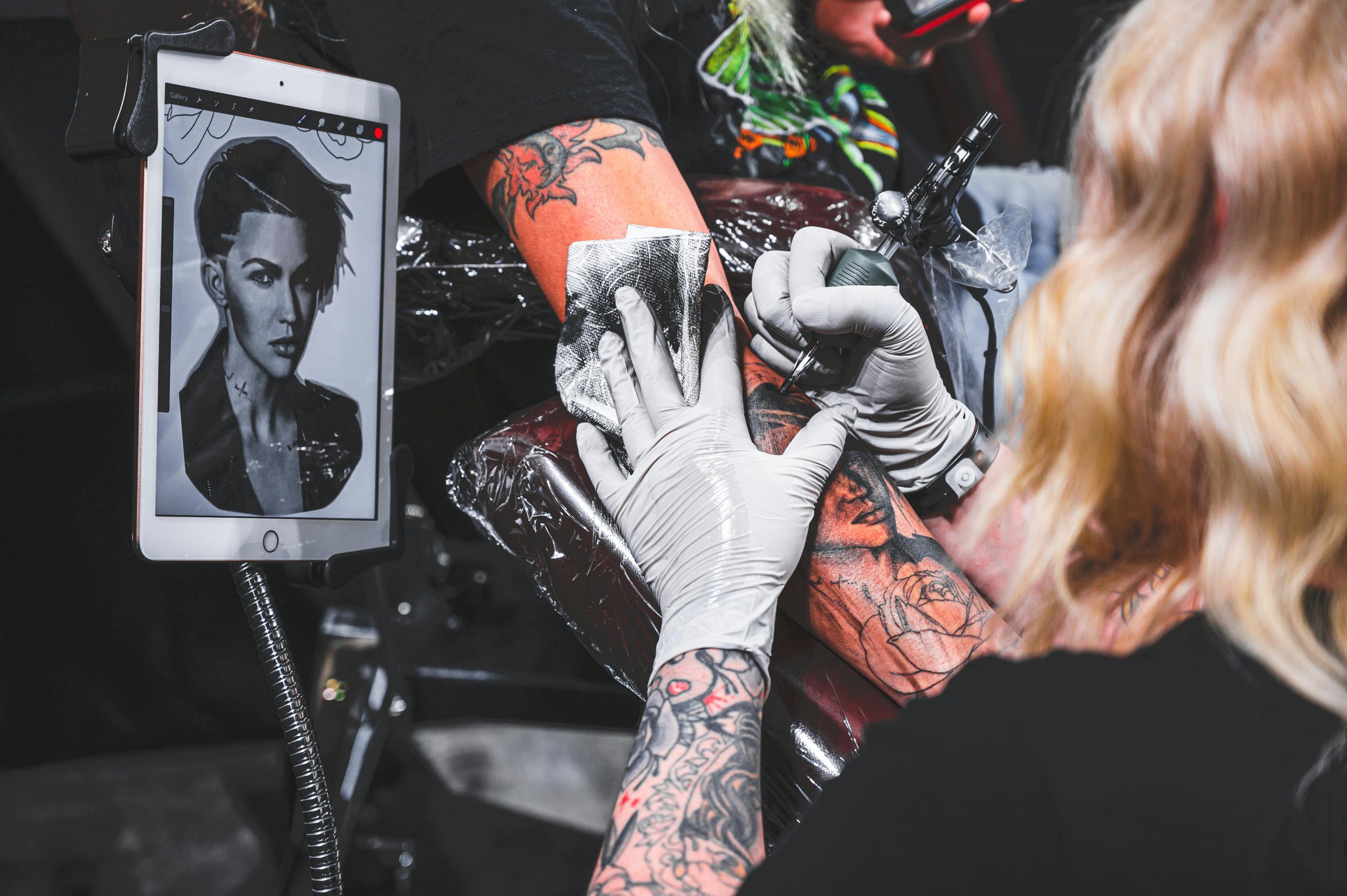
This guide breaks the process into simple checks, so they can book with confidence and avoid expensive regret.
What style should they look for first?
They should start by naming the style before searching for a tattoo artist Sydney clients trust. An artist who specialises in fine line, realism, Japanese, neo-traditional, blackwork, or lettering will usually outperform a generalist when the design is style-specific.
If they are unsure, they can collect 10–15 reference images and look for the common thread, such as thin lines, heavy shading, bold colour, or high detail.
How can they judge an artist’s portfolio properly?
They should look for consistency, not just one viral post. A strong portfolio shows the same quality across many tattoos, with clean lines, smooth shading, solid blacks, and healed results.
They should zoom in. Wobbly outlines, patchy fills, and muddy gradients often show up when viewed close. If the portfolio only shows fresh tattoos, they can ask to see healed work from 6–12 weeks later.
Why do healed photos matter so much?
Healed tattoos reveal the truth about line depth, saturation, and design choices. Fresh tattoos can look crisp because the skin is irritated and the photo is edited, while healed tattoos show whether the ink settled cleanly.
They should expect fine line tattoos to soften slightly after healing, but they should not blur into each other or lose readability.
What hygiene and licensing signs should they check?
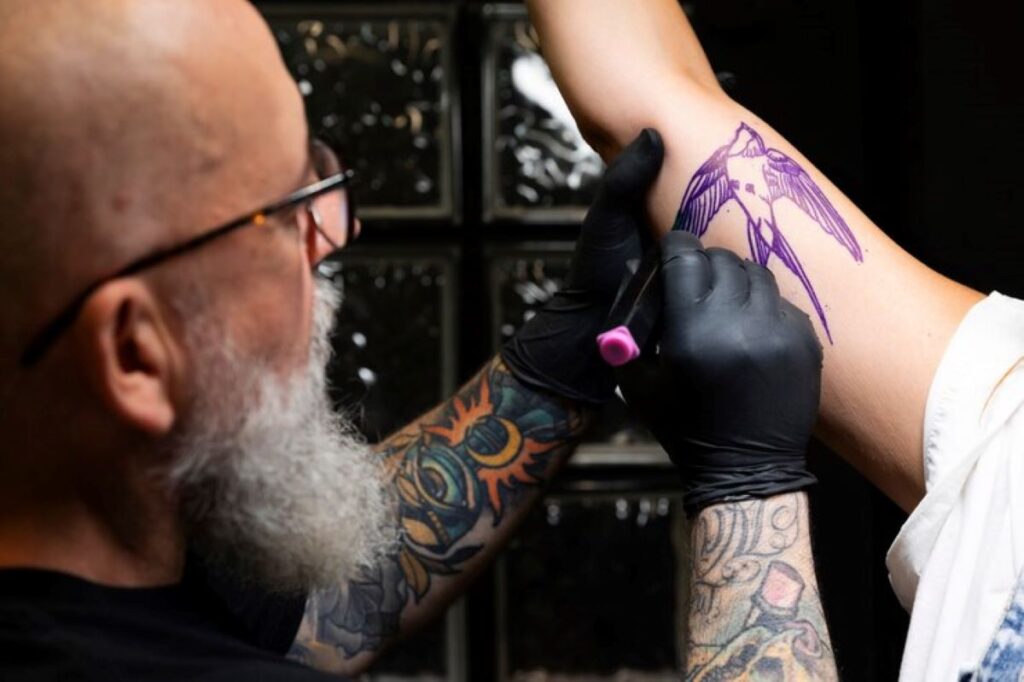
They should expect a studio to feel clinical, not casual. Surfaces should be covered or disinfected, needles should be single-use and opened in front of them, and the artist should wear fresh gloves and change them often.
They can also look for clear aftercare instructions, sharps disposal, and a setup that avoids cross-contamination. If a studio is evasive about hygiene questions, they should walk out.
How should they compare studios across Sydney?
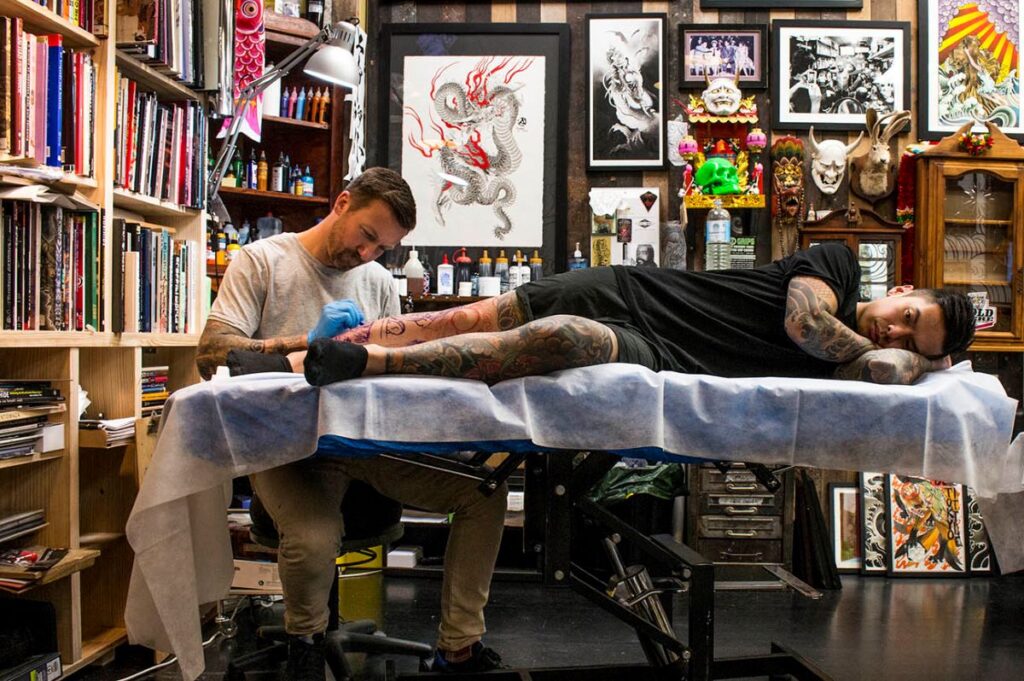
They should compare based on the artist, not the postcode. Sydney has excellent artists across many suburbs, so travel is often worth it for the right fit.
They can shortlist 3–5 artists, then compare: portfolio match to the design, healed work, professionalism in messages, booking clarity, and how comfortable they feel in the studio environment.
What questions should they ask during the consult?
They should ask questions that reveal experience and design thinking. Useful consult questions include:
- How would they adjust the design for placement and longevity?
- What needle groupings and line weights suit the concept?
- How will the tattoo age in five to ten years?
- How many sessions will it take, and what will the cost range be?
- What aftercare do they recommend for that style?
A good artist will answer clearly and suggest improvements, not just agree with everything.
How can they tell if the artist understands their design?
They should look for active interpretation, not simple repetition. A strong artist will explain what will change on skin, such as spacing, line weight, or contrast, so the tattoo stays readable over time.
If the artist dismisses concerns, rushes the discussion, or cannot explain choices, that is usually a poor sign for collaboration.
Should they prioritise price or availability?
They should prioritise quality and safety over a quick booking. Great artists in Sydney are often booked out, and that is usually a signal of demand, not inconvenience.
If a quote seems unusually cheap for a complex design, they should ask what is included, how long the session is, and whether touch-ups are offered. Cheap tattoos often become expensive cover-ups.
What red flags should they avoid?
They should leave if they see any of the following:
- Pressure to pay a deposit without clear terms
- No consent forms or aftercare guidance
- No healed work available for similar tattoos
- Heavy photo filters hiding line quality
- Unclean stations or poor glove discipline
- An artist who mocks references or ignores boundaries
A tattoo appointment should feel professional and respectful from the first message.
How should they prepare to get the best result?
They should set the artist up for success. That means sleeping well, eating beforehand, hydrating, and avoiding alcohol-to get more about benefits of acoiding alcohol, you may like to visit https://www.unsw.edu.au/newsroom/news/2025/07/day-off-drinking-alcohol-abstinence-health-benefits-stop-drinking. They should also arrive with clear references, correct spelling for any text, and realistic expectations about what works at the chosen size.
Aftercare matters just as much as application. If they follow the artist’s aftercare plan closely, the tattoo will heal cleaner and hold detail longer.
How can they make the final decision confidently?
They should pick the artist whose healed work matches the design style and whose communication feels clear and calm. The best tattoo artist Sydney for their design is the one who can explain decisions, maintain hygiene standards, and produce consistent results, not the one with the loudest social presence.
If they feel uncertain, they can pause and book a second consult. A good tattoo will last years, so the choice should never feel rushed.
FAQs (Frequently Asked Questions)
What style should I look for when choosing the best tattoo artist in Sydney?
Start by identifying the tattoo style you want, such as fine line, realism, Japanese, neo-traditional, blackwork, or lettering. Artists who specialise in your chosen style typically deliver better results than generalists. If unsure, collect 10–15 reference images to find common elements like thin lines or bold colours.
How can I properly judge a tattoo artist’s portfolio?
Look for consistency across multiple tattoos rather than focusing on a single viral image. A strong portfolio features clean lines, smooth shading, solid blacks, and healed results. Zoom in to spot any wobbly outlines or patchy fills. Ask to see healed work from 6–12 weeks after completion if only fresh tattoos are shown.
Why are healed tattoo photos important when selecting an artist?
Healed photos reveal how well the ink settled and the true quality of line depth and saturation. Fresh tattoos may look crisp due to skin irritation or editing but healed tattoos show if the design remains clear without blurring or loss of readability over time.
What hygiene and licensing standards should I check in a Sydney tattoo studio?
Expect a clinical environment with disinfected surfaces, single-use needles opened in front of you, and artists wearing fresh gloves that they change frequently. Look for clear aftercare instructions and proper sharps disposal. Avoid studios that are evasive about hygiene practices.
How do I compare different tattoo studios across Sydney effectively?
Focus on the artist’s portfolio and fit rather than location. Shortlist 3–5 artists based on portfolio match to your design, healed work quality, professionalism in communication, booking clarity, and your comfort level during consultations. Sydney has excellent artists across many suburbs worth considering.
What key questions should I ask during my tattoo consultation?
Ask about design adjustments for placement and longevity, suitable needle groupings and line weights, how the tattoo will age over 5–10 years, estimated session count and costs, and recommended aftercare for your chosen style. A good artist will provide clear answers and suggest improvements rather than just agreeing with everything.
Click here for more Exploring Sydney Tattoo Parlours: Style, Hygiene and Reputation